
Black Friday 2026 Gift Guide for a New Relationship (and Where UK Singles Meet)

The first gift you buy someone says a lot. A voucher for afternoon tea, a personalised print, two tickets to a gig: each one quietly says I’ve been listening.
And the sales are coming fast. Black Friday lands on 27 November 2026, and ahead of last year’s sales, Barclays found 45% of Black Friday shoppers planned to buy Christmas presents in the deals. So, who will you be buying for?
Ask ten people what a successful dating app looks like and you’ll get ten answers. For most, it’s simple: a match that becomes a real date, then a second one, then someone you want to buy a Christmas present for.
Here’s the catch. No major app publishes an independently audited “success rate” for the UK. The figures online are surveys, usage rankings or the companies’ own marketing.
So instead of inventing numbers, this ranking uses signals you can check: how many Brits use each app, what it’s built for, and what each company claims, clearly labelled.
First, a little retail therapy. The gifts new couples buy say a lot about what “working” looks like.
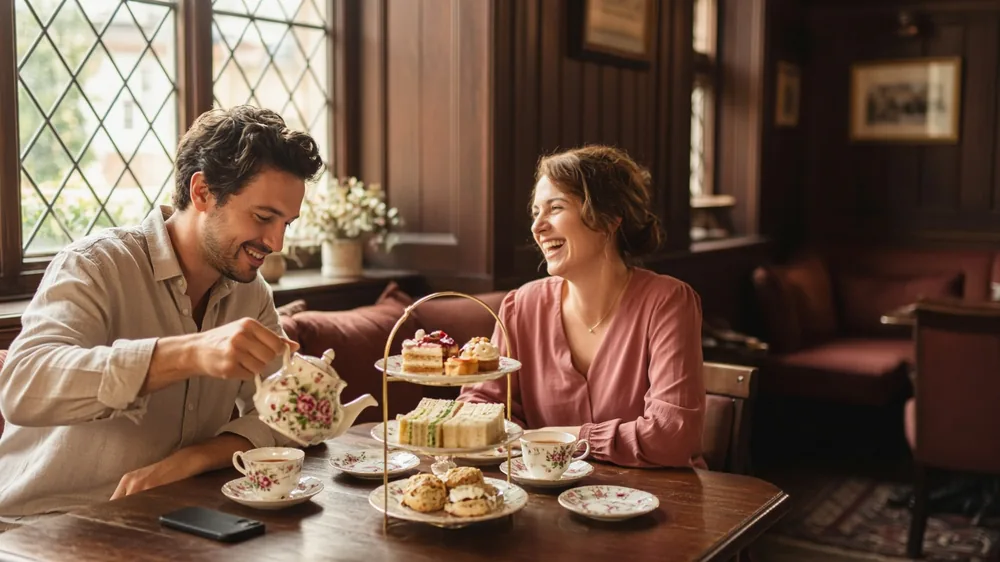
An experience gives you a reason for a second date. Virgin Experience Days lists afternoon tea for two at a traditional pub for around £37 at the time of writing, and Red Letter Days sells similar experience vouchers. Check the expiry date and booking terms before you pay.
Etsy UK and Not On The High Street are full of personalised prints, mugs and candles from independent makers. Order early, as personalised items often need extra production time in December.
A power bank for the friend who’s always on 5%, or wireless earbuds for the commute. Argos and Amazon UK usually run tech offers over Black Friday weekend and Cyber Monday (30 November), and the Boxing Day sales on 26 December catch anything you miss.
Set price alerts now, not the night before. But first: how do you know a match is going somewhere?
The app you choose can make these signals far more likely. Here’s what the data says.
The pub used to be Britain’s favourite matchmaker. Research eharmony commissioned from Imperial College Business School in 2019 found that one in five couples met in a pub in the late 1970s and early 1980s, compared with about one in 14 who got together between 2015 and 2019.
Apps have taken its place. In The Knot Worldwide’s 2025 Global Wedding Report, 33% of UK couples surveyed who married in 2024 met through a dating app, the most common way of meeting.
Ofcom’s Online Nation 2025 report says around 5 million Brits, or 11% of over-18s, visited a dating service in 2025. A year earlier, Tinder reached 1.9 million people, Hinge 1.4 million and Bumble 1.1 million, and most used more than one app.
So which apps show the strongest signals right now?
How we ranked: UK usage (Similarweb’s Google Play dating ranking, September 2026), reach (Ofcom), relationship focus and published outcome data.
Hinge calls itself the app “designed to be deleted” and sits first in Similarweb’s UK ranking. Profiles mix photos with written prompts, so you reply to something specific instead of just swiping.
Its strongest outcome signal comes from the US: in The Knot’s 2024 engagement study, 36% of engaged couples who met online met on Hinge, the top app for the third year running.
eharmony ranks well below the big three for usage, but it’s designed for commitment: a detailed compatibility questionnaire first, then fewer, more considered matches.
The company says someone finds love on eharmony every 14 minutes and that it has helped over 2 million people find love. Those are eharmony’s own figures, not independent data.
Bumble is third in the UK ranking. In August 2026 it dropped its women-message-first rule: anyone can now start the chat, and matches get 72 hours to reply instead of 24, which suits busy people.
Breeze, fifth in the UK ranking, skips the chat. If you match, it books a first date at a partner bar, and you pay per date instead of a subscription.
Breeze reports a 4.5 average date rating, under 1% no-shows and that 75.4% of daters exchange phone numbers after a date. Again, those are the company’s own numbers.
Tinder had the largest UK reach in Ofcom’s data and is second for usage. You can show relationship goals on your profile, but a huge pool means mixed intentions, so be clear in your bio.
Match, eighth in the UK ranking, aims at singles ready to commit and runs free and paid singles events across UK cities. It says 2.6 million people have met someone on Match (its own survey-based estimate).
OkCupid, 16th in the UK ranking, matches people partly on answers to questions about lifestyle and values. The UK pool is smaller, but the depth helps.
| App | Best for | Success signal | Approx. price | Watch-out |
|---|---|---|---|---|
| Hinge | Meaningful conversations | No. 1 UK usage; top app for US engaged couples | Roughly £15–£35 a month | Free daily like limit |
| eharmony | Long-term commitment | Company claim: love every 14 minutes | About £10–£40 a month | Plans billed upfront |
| Bumble | Low-pressure chat | No. 3 UK usage | Roughly £17–£40 a month | Matches can expire |
| Breeze | Getting to a real date fast | Company: 75.4% swap numbers | Per date (Breeze quotes €10–€15 or local equivalent) | Late cancelling costs your token |
| Tinder | Biggest choice | Largest UK reach (Ofcom) | Roughly £17–£35 a month | Mixed intentions |
| Match | Committed singles, events | UK singles events | Check in the app | Smaller pool |
| OkCupid | Values-based matching | Question-based matching | Check in the app | Smaller UK pool |
Prices are approximate at the time of writing and vary by age, location and plan length; longer plans are billed upfront. Check the final price in the app.
And stay safe: meet somewhere public, tell a friend where you’re going, keep chats in the app at first and never send money to someone you haven’t met.
No app publishes an audited UK success rate. On current signals, Hinge leads, with eharmony a strong pick if long-term commitment is your priority.
If a relationship is the goal, Hinge’s prompts and dating-intentions field give you more to go on. Tinder’s strength is sheer choice.
Tinder, Hinge and Bumble top Similarweb’s Irish ranking, and a 2025 Core survey found apps were the most common way Irish 18–34-year-olds met their partner. Check euro prices in the app.
The season is short and diaries fill up fast. Choose one or two apps from the ranking, refresh your profile tonight and suggest a real plan.
By the time Black Friday arrives, you might know exactly who that small, thoughtful gift is for.