Budgeting Apps for Couples in 2026: Plan Gifts, Trips and Dates Together

Ireland’s Christmas countdown has two big Fridays this year. Black Friday lands on 27 November, and a week later, on Friday 4 December, The Late Late Toy Show takes over RTÉ One and RTÉ Player. Between the two, most gift lists get written, the Black Friday deals get checked and somebody starts asking when An Post’s last posting dates are.
If there’s a name you’d love to add to next year’s list, this is a good season to start. Here’s how Irish singles really meet in 2026, how it differs between Dublin, Cork, Galway and the countryside, which apps you’ll find in the Irish App Store, and a festive diary with plenty of first-date excuses.
Apps are a normal part of dating here, but they sit alongside the old routes rather than replacing them: friends of friends, the club, the local, the wedding where you end up at the same table. In a country this size, those worlds overlap constantly, and that shapes how people use the apps.
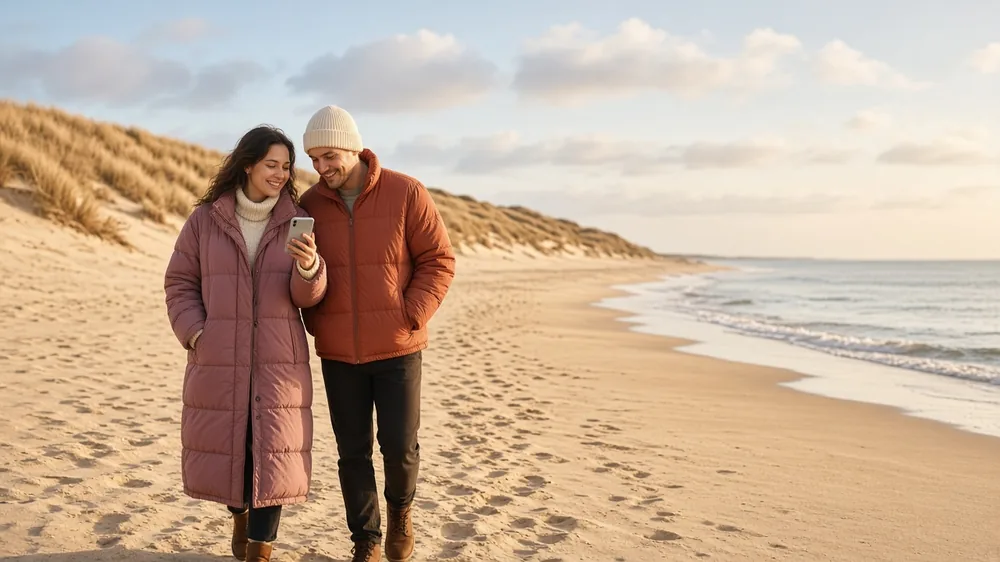
Expect to see a colleague, a cousin’s friend or your ex’s flatmate while you swipe. Take it in your stride, keep it discreet and don’t screenshot anyone’s profile for the group chat. If there are people you’d rather not see at all, Tinder’s Block Contacts setting lets you hide from people in your phone’s contacts, and they aren’t told.
A light, local opener works well here. Mentioning a shared county, a game you both watched or the weather on your walk in is often enough to get a chat going, and it tends to beat a line copied from the internet.
As the biggest city, Dublin has the largest pool of people on the apps, which is both the good news and the problem. With so much choice, chats drift, and between work dos and catch-ups, December diaries fill fast.
Suggest something specific and easy early on: a walk on the East Pier in Dún Laoghaire, the DART out to Howth, or a coffee along the canal after work. A weeknight plan usually beats waiting for a free Saturday that never comes.
The commuter belt matters too. Plenty of people on Dublin apps live in Kildare, Meath or Wicklow, so check whether a match means the city itself or an hour up the motorway before you agree on a venue.
In Cork and Galway, there’s a fair chance you’ll share a mutual friend with most of your matches, so kindness and a bit of discretion go a long way. The upside is that first dates feel less like meeting a stranger.
In Cork, the Guinness Cork Jazz Festival runs from 22 to 26 October over the bank holiday weekend, with a music trail across more than 70 venues in the city, Douglas and Kinsale, according to the festival. A gig makes an easy first date, because the music fills any pauses.
Galway mixes students and locals, so the dating pool changes with the college year. For a free, very Galway first date, walk the prom in Salthill to the Blackrock diving tower and “kick the wall”, a local tradition, before strolling back.
Outside the cities, the apps still work, but the pool is smaller, and your best match may be a county away. Meet halfway in a town you both know, and plan around the weekend, when more people are home and around.
It also pays to mix the apps with real-life circles. Macra na Feirme runs local clubs across the country, and they’re not only for farmers, while GAA club socials remain a reliable way to meet new people.
And if you want proof that rural Ireland invented social matching long before the apps, the Lisdoonvarna Matchmaking Festival in Co. Clare has drawn singles every September for more than 160 years, with roots in helping people from rural communities meet. This year’s festival is over, so treat it as a fun fact or a plan for next September rather than a date idea for the weeks ahead.
All of these are listed in the Irish App Store, and Hinge, Tinder and Bumble all sit among the top 100 free Lifestyle apps there at the time of writing. They’re in alphabetical order, because the right one depends on you, not on a league table.
| App | How it works | Try it if you… | Good to know |
|---|---|---|---|
| Bumble | Either person can message first, and matches have 72 hours to reply | Like a calmer, less rushed start | In-app voice and video calls |
| eharmony | A long questionnaire, then suggested matches | Know you want something long-term | Unlimited messaging is for paying members |
| Grindr and HER | Apps built by and for LGBTQ+ people | Want a queer-first community | Grindr serves gay, bi, trans and queer people; HER serves lesbian, bi, queer and non-binary people |
| happn | Shows people whose paths you’ve come close to | Spend your days somewhere busy | Less useful in quiet areas |
| Hinge | You like or comment on a specific photo or prompt | Prefer a conversation starter to a swipe | Chat and voice notes (no calls) |
| Tinder | Swipe-based, with a huge choice | Are happy to browse widely | Text chat (video retired); Block Contacts for small-world moments |
All of them are free to download at the time of writing. Paid tiers are optional, and prices in euro vary by plan and age, so check in the app before you pay.
Chat in the app until you’re comfortable, meet somewhere busy and tell a friend where you’ll be. If a match lives a county away, sort out your own lift home before you go. Never send money to someone you haven’t met, whatever the story, and be wary of anyone who pushes to move the chat off the app within minutes. In an emergency, call 112 or 999.
All the big ones are listed in the Irish App Store, including Bumble, eharmony, happn, Hinge and Tinder, plus Grindr and HER for LGBTQ+ singles.
The pool is smaller, so it can take longer. Meeting halfway, dating at weekends and mixing apps with local clubs all help.
No. You can join and chat for free on all of these apps. Paid tiers are optional extras.
Irish dating in 2026 is a mix of apps and old-fashioned overlap. Whether you’re in Dublin, Cork, Galway or a townland miles from anywhere, the best app is the one that gets you to a real first date.
Pick one, keep it friendly and suggest the walk, the gig or the swim. Somebody might be on your gift list by next Christmas.